
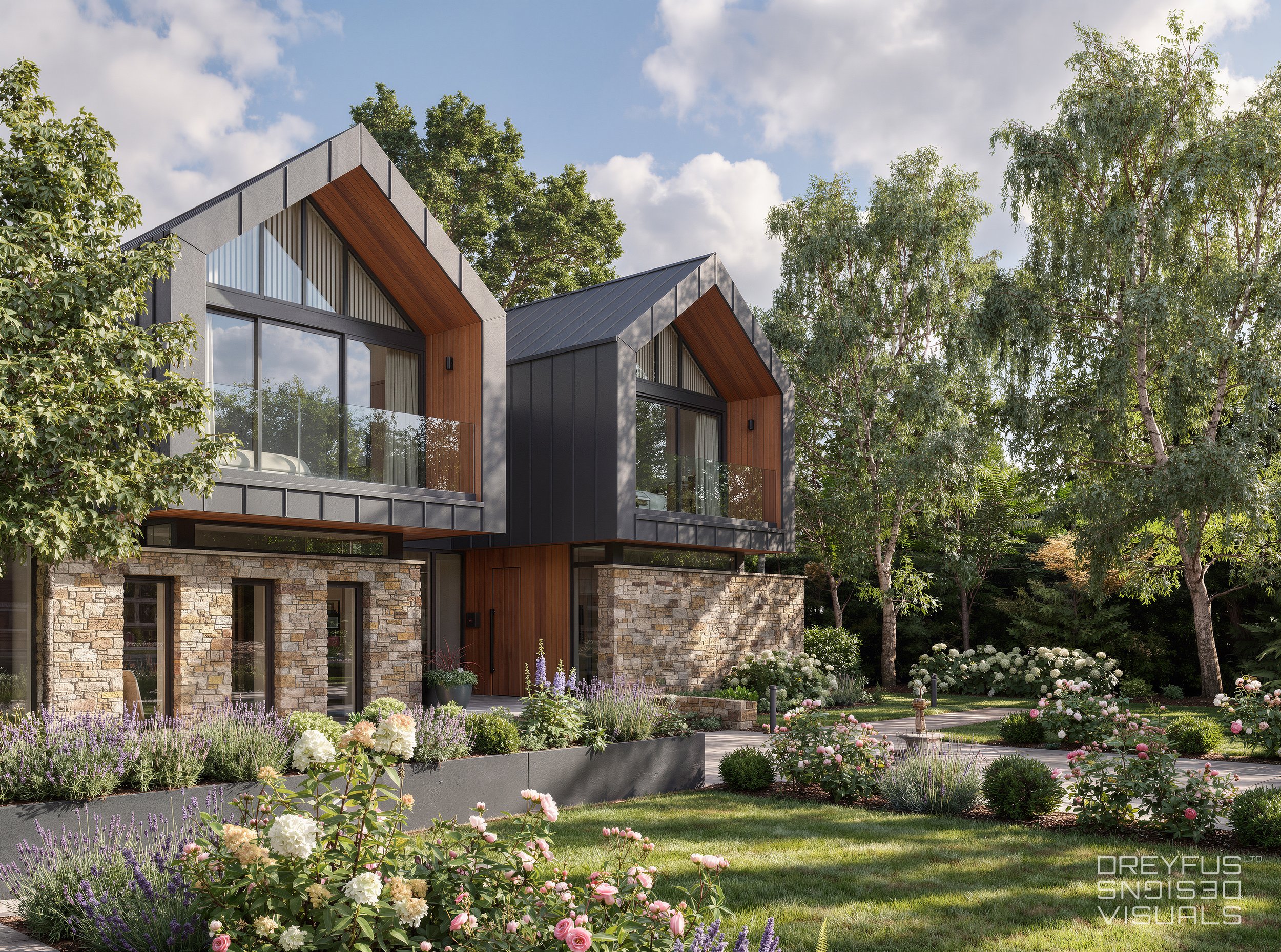
Design + Technology = Better

Architectural Design Services
“Whether you’re planning a home extension, loft conversion, new build, or complete refurbishment, we guide you through every stage of your project.
As RIBA chartered architects with over 20 years of experience, my local collaborator Kristian Peel and I bring professional expertise and creative vision to projects of all sizes.
We’re local, down-to-earth architects who leverage the latest design technologies to deliver better architectural solutions, faster and more cost-effectively.
We believe good architectural design isn’t about style—it’s about creating spaces that bring you joy, fit your budget, and sit respectfully and harmoniously within their surroundings.
It’s as simple as that. ”
How we work: The RIBA stages explained
-
What happens: We start with a conversation about your vision, budget, and aspirations for your home.
What we do:
Initial consultation to understand your needs and lifestyle
Discuss your budget and timeline expectations
Review your property and its potential
Advise on feasibility and initial options
Help you understand what's possible within planning and building regulations
Your investment: This initial consultation is often offered as a fixed-fee or complimentary meeting to explore whether we're the right fit for your project.
-
What happens: We develop a clear, detailed brief that captures exactly what you want to achieve.
What we do:
Conduct a detailed site survey and analysis
Research planning history and constraints
Investigate local planning policies and conservation requirements
Develop your project brief with detailed requirements
Establish budget parameters and project timeline
Advise on procurement strategy (how you'll appoint contractors)
Typical duration: 2-4 weeks
Deliverables:
Detailed project brief document
Initial feasibility study
Site analysis report
Budget and timeline frameworkDescription text goes here
-
What happens: This is where your vision starts to take shape through sketches, drawings, and visualizations.
What we do:
Develop initial design concepts exploring different approaches
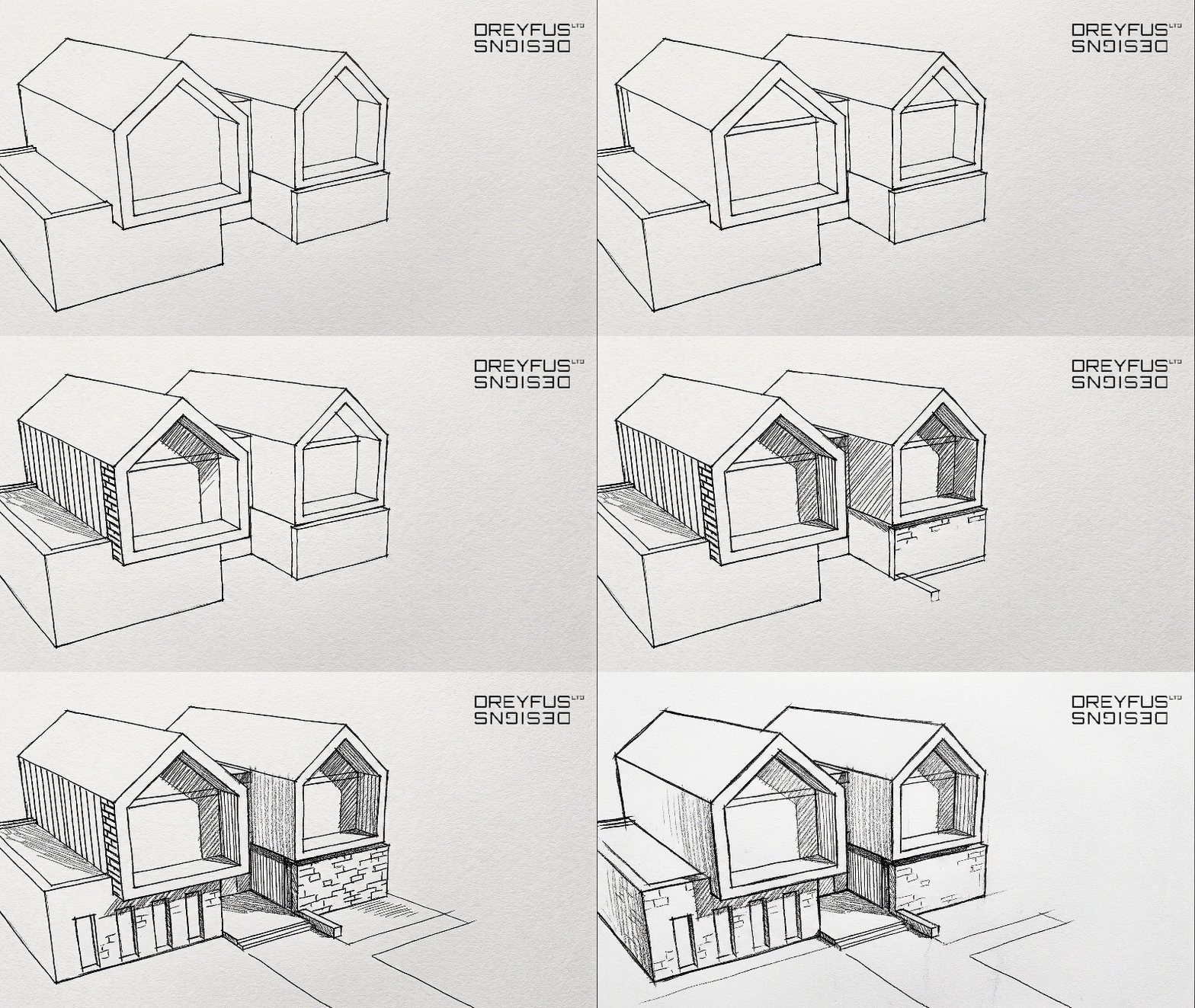
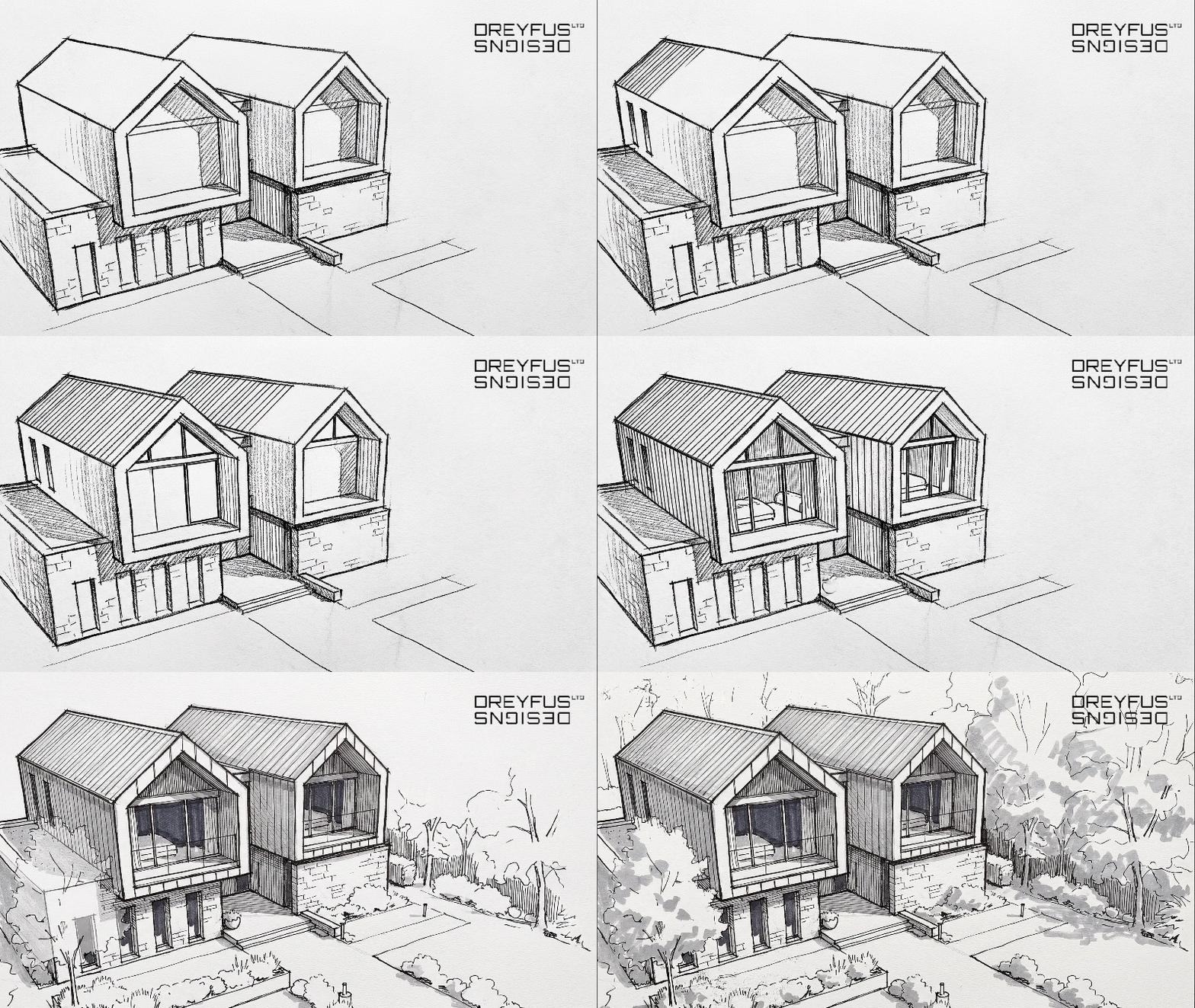
Create sketch designs and 3D visualizations
Present options for you to review and provide feedback
Refine the preferred design direction
Prepare design documentation for planning consultation or submission
Coordinate with structural engineers and other consultants as needed
Cost planning with quantity surveyor (if appointed)
Typical duration: 4-8 weeks
Deliverables:
Concept design drawings (plans, elevations, sections)
3D visualizations and sketches
Initial materials and finishes proposals
Updated cost estimate
Design report explaining the concept and approach
Key decisions: You'll choose your preferred design direction, and we'll refine it together before moving to planning.
-
What happens: We refine the design in detail, coordinating all technical aspects and preparing for planning permission.
What we do:
Develop detailed architectural drawings
Coordinate with structural engineers, M&E consultants, and specialists
Refine all spatial layouts, room dimensions, and circulation
Develop materials and finishes specifications
Prepare and submit planning application (if required)
Prepare detailed cost plan
Address any planning officer feedback or neighbour consultation responses
Typical duration: 6-12 weeks (including planning submission and determination period)
Deliverables:
Planning application drawings and documents
Coordinated consultant drawings (structural, M&E)
Detailed materials schedule
Updated cost plan
Planning permission (upon approval)
Note: Planning applications typically take 8 weeks for most residential projects, or 13 weeks for larger or more complex schemes.
-
What happens: We prepare all the detailed technical information needed for Building Regulations and construction.
What we do:
Produce detailed construction drawings and specifications
Coordinate all technical design information with engineers and specialists
Prepare and submit Building Regulations application
Develop detailed specifications for materials, finishes, and construction methods
Produce information for contractor tendering
Respond to Building Control queries and requirements
Typical duration: 8-12 weeks
Deliverables:
Full construction drawing package
Technical specifications
Building Regulations approval
Tender documentation for contractors
Window and door schedules
Finishes schedules
-
What happens: Your project comes to life on site.
What we do during tendering (5a):
Assist with contractor selection and tendering process
Review and compare contractor quotes
Advise on contractor appointments and contracts
Review construction programmes
What we do during construction (5b-5d):
Conduct regular site inspections (frequency agreed with you)
Review contractor's work for quality and compliance with design
Respond to contractor queries and requests for information
Review samples and mock-ups
Monitor progress against programme
Certify payments to contractors (if you appoint us for contract administration)
Address any issues or variations that arise
Coordinate with Building Control inspections
Ensure work complies with Building Regulations
Typical duration: Varies significantly by project size
Small extension/loft conversion: 3-6 months
Large extension or significant refurbishment: 6-12 months
New build house: 12-18 months
Deliverables:
Site inspection reports
Responses to contractor queries (RFIs)
Variation assessments
Payment certificates
Practical completion certificate
-
What happens: We ensure everything is completed to the highest standard before you move in or start using your new space.
What we do:
Conduct final inspections with you and the contractor
Create a snagging list of minor items to be addressed
Ensure all documentation is provided (warranties, manuals, certificates)
Obtain final Building Control completion certificate
Hand over all as-built drawings and information
Typical duration: 2-4 weeks
Deliverables:
Snagging list and verification of completion
Building Control completion certificate
As-built drawing record
O&M (Operation and Maintenance) manuals
Warranties and guarantees
-
What happens: We can provide ongoing support after your project is complete.
What we offer:
Post-occupancy reviews to ensure everything works as intended
Addressing any defects during the contractor's defects liability period (typically 12 months)
Advice on maintenance and care of your new spaces
Support for any warranty claims
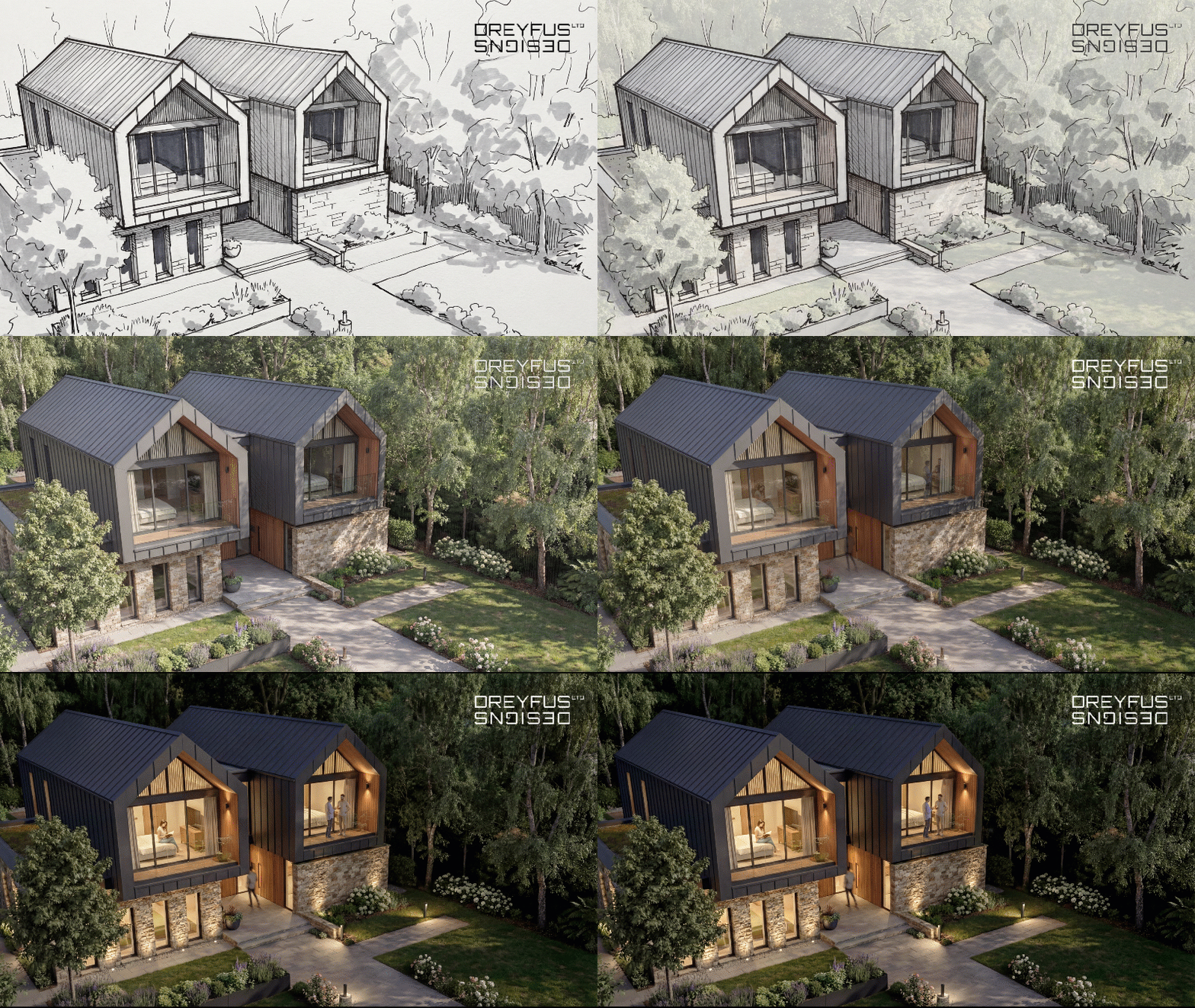
Typical Project Timelines
-
Stage 0-2 (Consultation to Concept): 6-10 weeks
Stage 3 (Planning if required): 8-12 weeks
Stage 4 (Technical Design & Building Regs): 8-10 weeks
Stage 5 (Construction): 3-6 months
Total from first meeting to completion: 9-14 months
-
Stage 0-2 (Consultation to Concept): 8-12 weeks
Stage 3 (Planning): 10-14 weeks
Stage 4 (Technical Design & Building Regs): 10-14 weeks
Stage 5 (Construction): 6-12 months
Total from first meeting to completion: 14-20 months
-
Stage 0-2 (Consultation to Concept): 10-14 weeks
Stage 3 (Planning): 12-20 weeks (may include pre-application consultation)
Stage 4 (Technical Design & Building Regs): 12-16 weeks
Stage 5 (Construction): 12-18 months
Total from first meeting to completion: 24-36 months
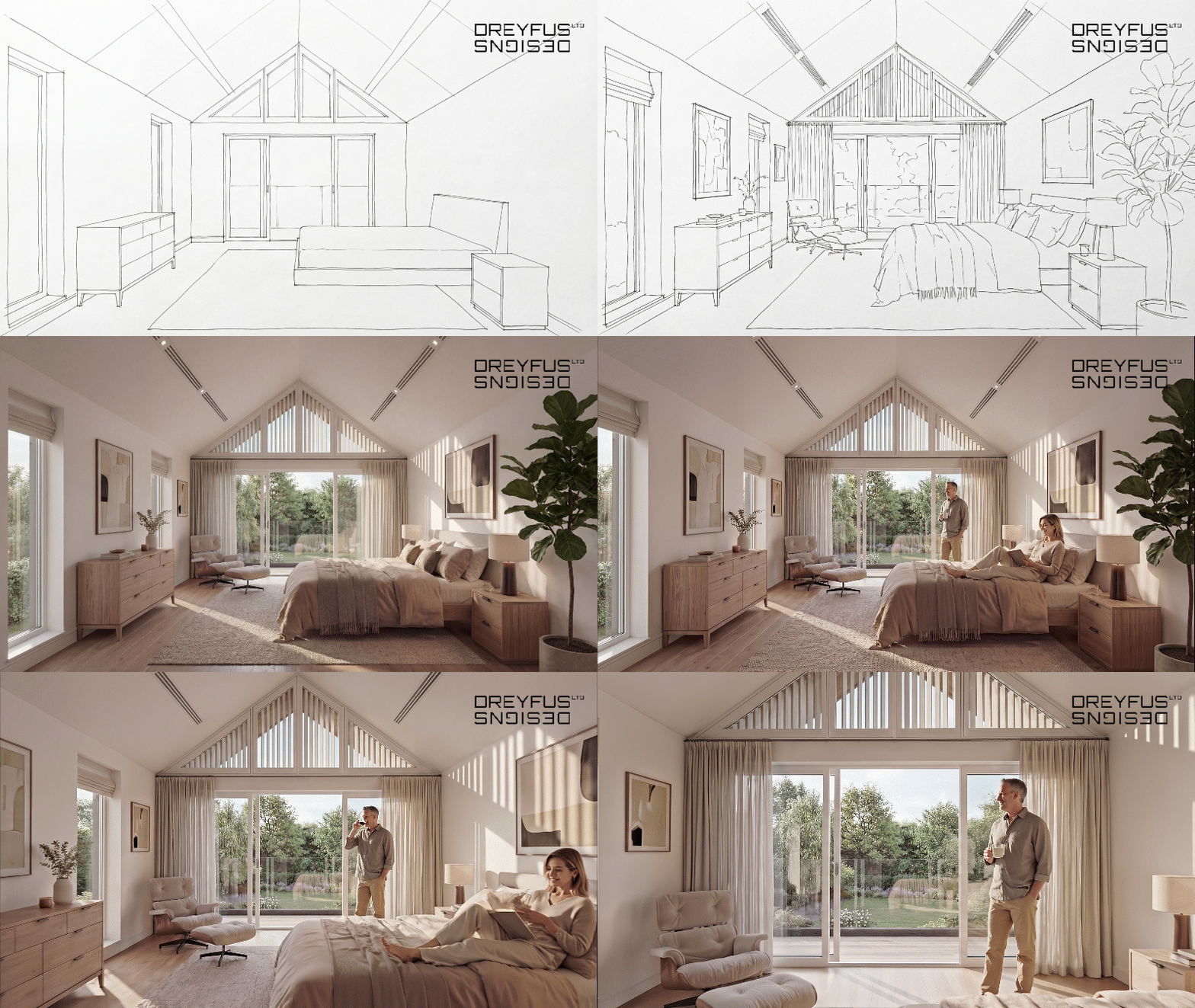
Our Process Overview
-
Get in touch via phone, email, or our contact form. We'll arrange an initial conversation to understand your project.
-
We visit your property (or meet virtually if preferred) to discuss your vision, budget, and timeline. This helps us understand if we're the right architects for your project.
-
We provide a clear fee proposal outlining our services, what's included at each stage, and our terms of appointment. Once you're happy, we'll formalize our appointment.
-
We work closely with you through each RIBA stage, keeping you informed and involved in all key decisions. Regular meetings and clear communication ensure your project stays on track.
-
We handle all interactions with planning authorities and Building Control, managing the submission process and responding to any requirements.
-
We support you through the build phase with site inspections and quality oversight, ensuring your vision is realized to the highest standards.
-
We ensure everything is completed properly and provide ongoing support as needed.
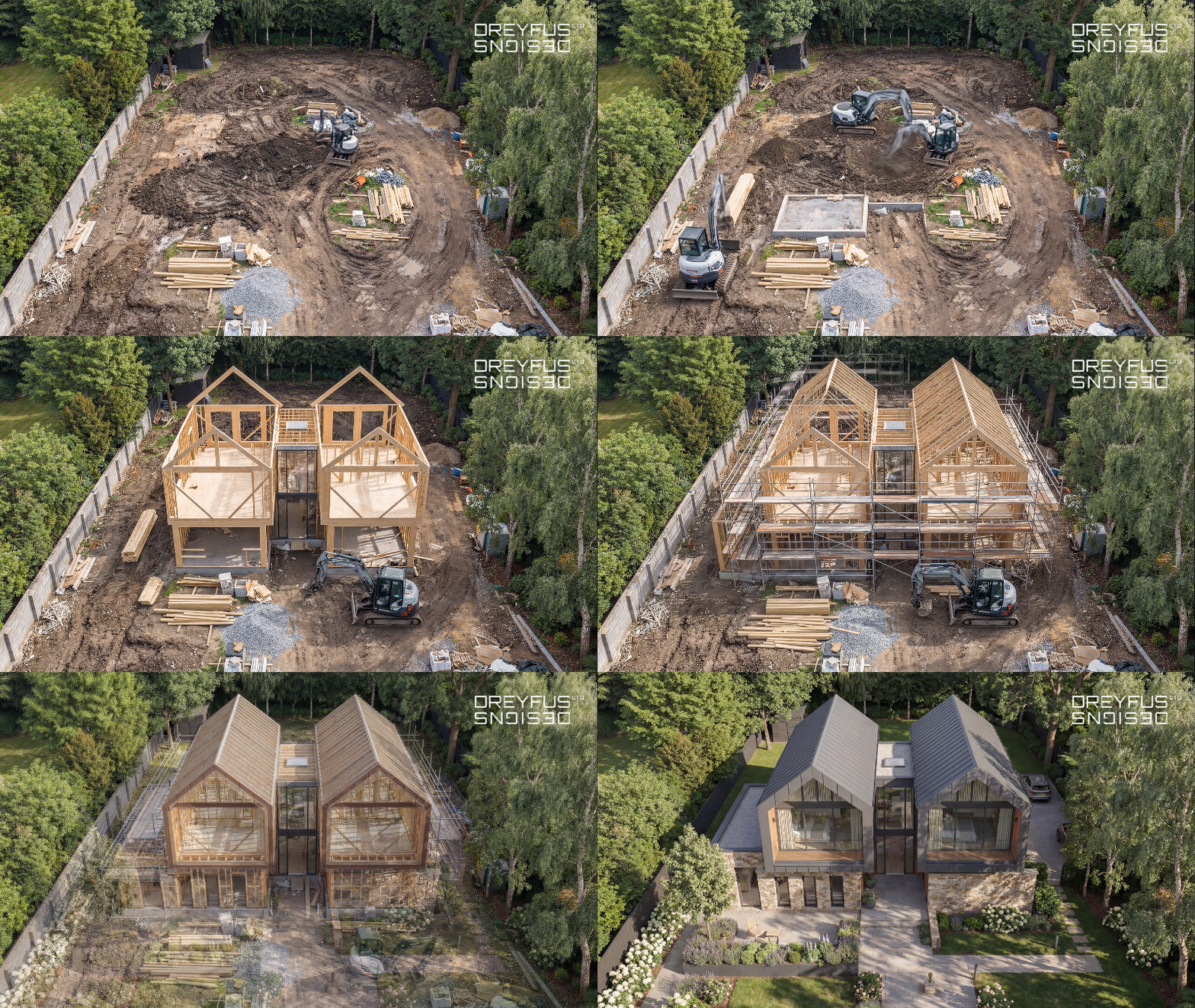
Case Studies & Testimonials
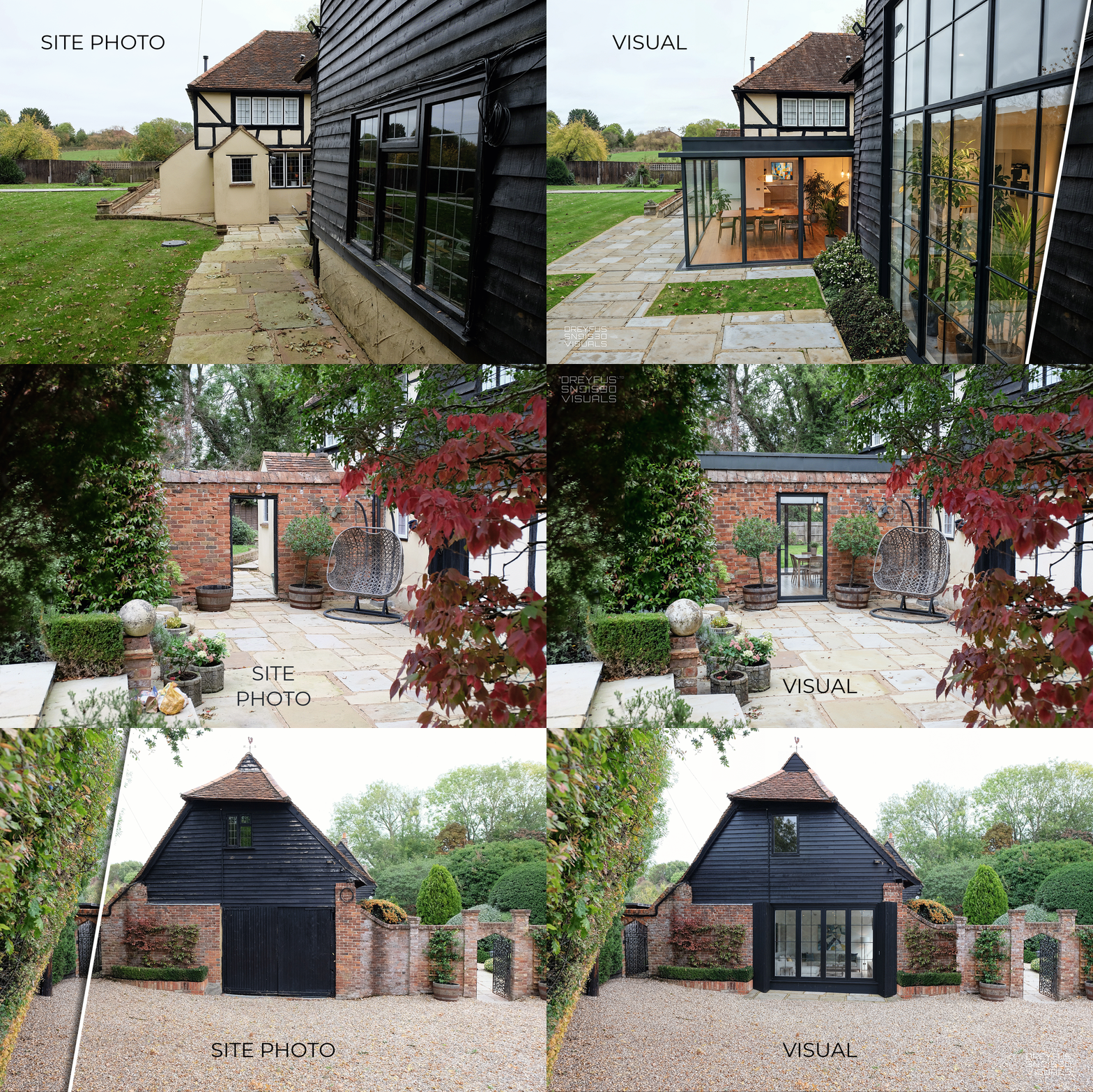
Listed building extension and conversion project in collaboration with Kristian Peel Architecture“It was a pleasure to be introduced to Dreyfus Designs for our barn renovation planning application and listed building consent. Jonathan was excellent to work with and really understood our vision for this phase of the project. His expertise in technical visualisations alongside his architectural experience and knowledge enabled him to bring the architect’s sketches/drawings completely to life. The initial photographs taken of our property and the corresponding visualisations Jonathan produced are absolutely stunning.
We weren’t originally thinking of having visualisations for our planning application but we are extremely happy we did.
The visualistions have also provided huge benefits in obtaining initial quotes from structural engineers, quantity surveyors and builders for moving the project forward.
Our sincere thanks to Jonathan for his exemplary work and professional ethics.”
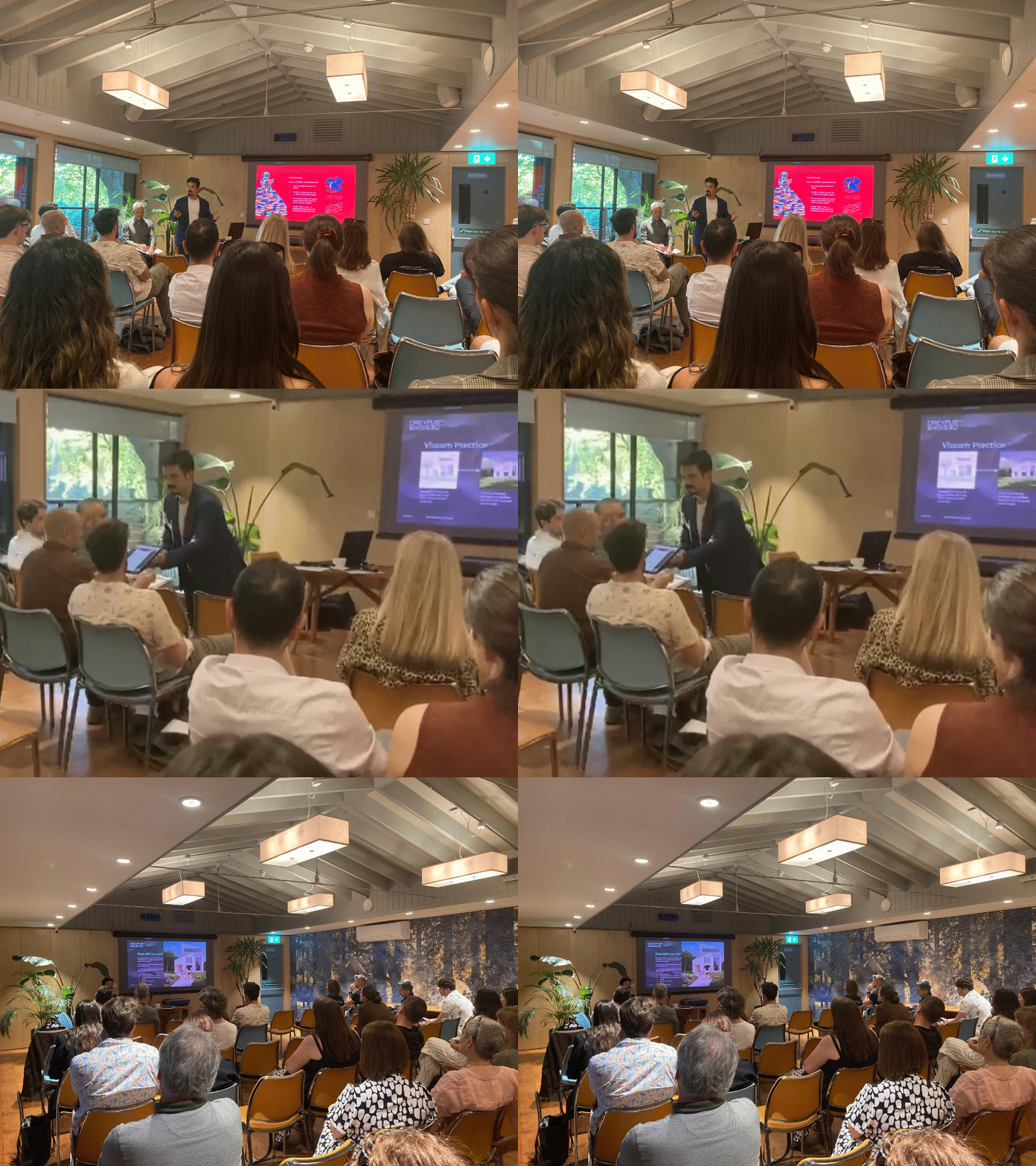
“Jonathan recently led an engaging and insightful evening at RIBA Berkshire, introducing branch members to essential AI tools that every architect should know.
In a short time, he covered an impressive amount of ground, using live demonstrations to showcase practical applications and offer expert tips on optimizing each software.
His presentation kept the audience captivated, sparking curiosity and deepening their understanding of AI in architecture.
The overwhelming positive feedback — including numerous requests for a follow-up event — speaks not only to the relevance of the topic but also to Jonathan’s expertise and skill as a teacher”
Design Technology Services
-
Searching for files and documents
Mining old projects for reusable data
Finding company templates
Extracting key information from lengthy briefs
…
-
Reading and managing emails
Drafting and polishing correspondence
Answering repetitive questions from colleagues
Coordinating meetings and preparing agenda
…
-
Balancing note-taking with active meeting participation
Writing up and distributing meeting minutes
…
-
Redesigning elements me or a colleague has created before
Modelling cladding panels individually on facades
Locating technical specifications I know exist
Creating diagrams and charts
Finding reference images for presentations and mood boards
Coordinating plan, sections and elevations in 2D instead of 3D/BIM
…
-
Assigning resources and managing project tasks
Tracking task progress
Reporting site visits
Updating area schedules and tracking changes
…
-
Completing repetitive forms and reports
Checking projects against the latest regulations
-
Asking colleagues for help using your software
Helping staff share knowledge and keep learning
Training staff on company’s software best practices and policies
“To understand the value of Design Technology, ask yourself:
How much time do I spend each day on...”
“Now total that time and reduce it by up to 50% — When compared to traditional design and management workflow that’s the efficiency gain Design Technologies like AI, Automation, Computational Design and BIM can deliver every single day.
You should also know that most award-winning projects emerging over the past decade would have been impossible to conceive and deliver without a robust Design Technology strategy and dedicated specialists.
While Design Technology expands aesthetic possibilities, its real power lies in efficiency and project management — meaning projects of any size, complexity, or budget can benefit. The question is: will yours?”
What is the AEC sector saying about AI & Automation?
“75% of users report Copilot improved their work
77% spend less mental effort on routine tasks
78% report communication improvements
66% would seek future roles where Copilot was available
The company is addressing the £10 billion annual problem of avoidable errors in UK construction projects”
“74% of AEC firms already utilize AI, 84% plan to expand AI use within the next five years”
“AI and machine learning now sit at the heart of Mace Construct’s ambition to improve productivity by 30% through digital automation by 2030”
My Design Technology Services
-
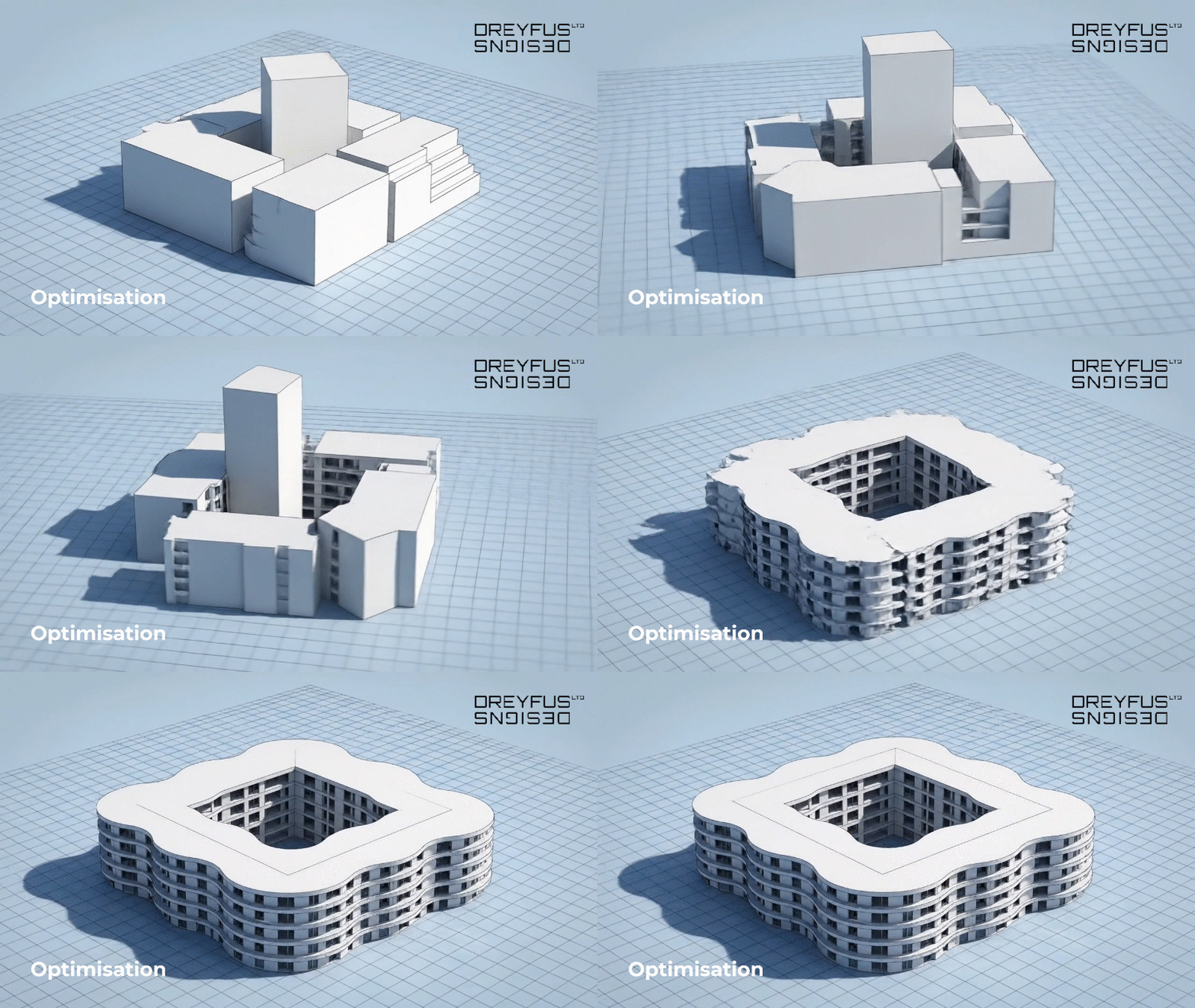
Computational design has a huge impact on architecture and design by enabling creatives to optimize their workflow for both efficiency and aesthetics. This approach allows for intricate modelling and simulation, transforming complex data into tangible form, and performing tasks that would simply be out of reach with conventional design methods.
By leveraging algorithms and advanced software, designers can explore numerous design iterations in minimal time, ensuring that the final structure not only meets functional requirements but also embraces innovative forms. The benefit lies in the seamless integration of performance and beauty, paving the way for ground-breaking architectural solutions that are sustainable, adaptive, and forward-thinking.
With over 15 years of experience designing high profile buildings of all sizes using computational design workflows I can help you solve challenging massing geometries and accelerate concept and feasibility studies with cutting-edge design tools.
I also offer introduction and tailored implementation of these tools to help staff make the most of the latest design technologies giving them new means to express their creativity and assess design solutions better.
Finally by identifying together repetitive tasks in your design workflows we can find solutions to automate them and give you more time to focus on what matters most: The project
-
Generative AI is revolutionising the architectural and creative landscape by enabling designers to explore an unprecedented range of design possibilities at speed no one truly anticipated.
By harnessing various AI engines designers can generate myriad of design alternatives based on any image reference, including hand sketch, a simple description (text prompts) and parameters specific to each AI tool.
This technology not only accelerates the ideation/concept phases and feasibility layouts production now it starting to allow for the optimisation of structural performance and sustainability as well.
A few generative AI tools providers also let you create bespoke database which ensure a more consistent output unique to your company aesthetic. Guiding AI generation with a pen live is also possible now and can make the experience much more accurate and immediate for anyone who enjoys sketching.
I have been tracking, practicing with and implementing generative AI tools for almost 3 years now and I can help implementing generative AI into your creative workflow. This will show designers how to work with AI as a “partner” and also understand its current limits to avoid any frustrations.
For fields like visualisation this can lead to huge savings but also opportunities to provide better visuals for internal review and for projects that don’t necessarily have the budget for higher grade, expensive imagery.
Generative AI is great for imagery but it is even more impactful for business and project management. Recent studies surveying AEC companies show that with the right AI tools and workflows you can save on average half a day, per person, per week and it is still early days in the evolution of AI. I can help you choose and implement the best AI tools and workflow to boost your productivity and I can assist with adoption by providing solutions that are bespoke to your needs and company culture. Description text goes here
-
Visualisation and Virtual Reality (VR, MR, AR) have become invaluable tools in the fields of architecture and design, transforming the way designers conceptualise and communicate their ideas.
These technologies enable architects to create immersive experiences that allow stakeholders to navigate spaces before they are built, fostering a deeper understanding of spatial relationships and functionality.
By visualising projects in immersive three dimensions, architects and clients can identify potential design flaws early in the process, facilitating more informed decision-making and minimising costly revisions and prototyping cycles.
Furthermore, virtual reality enhances collaboration by allowing clients and team members to engage with designs interactively, ensuring that visions align and expectations are clearly communicated.
With over 20 years experience in architectural visualisation and 10 years in VR/AR/MR technology in practice with staff, developers and clients I know what it takes to get results. I also regularly track and test the latest viz and XR tools to see what benefits they can bring to various design workflows and deliverables.
I can help you select the right visualisation software workflows and hardware to suit your needs, as well as help you implement Virtual Reality for your day to day work and projects presentations.


Get in touch
Interested by my services or wants to learn more? Please fill out some info and I will contact you shortly. Thank you.
Follow me on social

About
-

Jonathan Dreyfus
FOUNDER
Architect ARB-RIBA, computational designer, and AI creative with nearly 25 years of experience in London's architectural scene.
After starting my career in Paris, I moved to the UK and worked on high-profile projects across multiple sectors at 3D Reid, KSS, and Kohn Pedersen Fox (KPF). While developing strong expertise in sports architecture—including training grounds for Liverpool FC and Brighton & Hove Albion, and the Oceane Stadium—I've also delivered projects spanning transportation, workplace, residential, hotel, retail, and cultural sectors.
For the past 15 years, I've specialized in computational design to solve complex building challenges and streamline workflows. This expertise has led me to speak at industry events including the BIM Summit (Dublin) and ATN Archi Tech Network (London), contribute to the DCIO review (Design Computation Input/Output), and conduct workshops helping practices implement innovative design technologies.
I believe cutting-edge design technology shouldn't be the exclusive privilege of large firms. That's why I founded Dreyfus Designs Ltd—a practice and consultancy offering architectural design services to homeowners and property developers, as well as design technology consulting to AEC businesses seeking to leverage the latest design and management technologies such as AI, for competitive advantage.
Finally, for architectural design services, both my collaborator Kristian Peel* and I are based in Chorleywood, Hertfordshire. We primarily welcome projects throughout the local area and surrounding counties—including Buckinghamshire, Bedfordshire, Cambridgeshire, and North West London—but remain open to projects further afield.
Frequently Asked Questions
About Our Services
-
While not always legally required, an architect brings significant value: we maximize your property's potential, navigate complex planning and building regulations, coordinate contractors and engineers, and ensure your investment achieves the best possible outcome. For anything beyond very minor works, professional architectural input typically saves time, money, and stress while delivering a far superior result.
-
RIBA chartered architects have completed extensive university education (typically 7 years), professional experience, and rigorous examinations. We're registered with the Architects Registration Board (ARB) and bound by professional standards and insurance requirements. This ensures you receive qualified, insured, and accountable professional advice.
-
We work on projects of all sizes, from modest single-room extensions to complete new build houses, workspaces, retail or leisure & cultural spaces. Every property is important to its owners, and we bring the same professional care to projects regardless of scale.
-
We are based in Chorleywood, Hertfordshire, and primarily serve clients throughout the local area and surrounding counties—including Buckinghamshire, Bedfordshire, Cambridgeshire, and North West London—but we remain open to projects further afield.
About Costs & Fees
-
Architectural fees vary depending on project complexity and scope of services. As a general guide:
Fees typically range from 8-15% of construction costs for full services
For a £100,000 extension, expect architectural fees of £8,000-£15,000
We can also offer fixed fees for specific stages or services
Initial consultations are often provided at a reduced rate or complimentary
We provide transparent, detailed fee proposals before you commit to anything.
-
Fees are typically invoiced in stages aligned with the RIBA work stages or monthly, depending on what's agreed. We'll clearly outline the payment schedule in our appointment terms.
-
Our fees include all architectural design work, drawings, planning and Building Regulations applications, specification writing, and the services outlined in each RIBA stage. Additional costs (such as planning fees, Building Control fees, structural engineer fees, and other consultant costs) are outlined separately and are not included in our fees.
-
Construction costs vary enormously based on specification, location, site conditions, and timing. As rough guides (2025):
Basic extension: £2,000-£2,500 per m²
Good quality extension: £2,500-£3,500 per m²
High specification extension: £3,500-£5,000+ per m²
Loft conversions: £40,000-£70,000+ depending on specification
New build houses: £2,500-£4,000+ per m²
We provide cost guidance throughout the design process and recommend appointing a quantity surveyor for larger projects to ensure accurate cost planning.
About Planning & Regulations
-
It depends on your project. Many extensions and alterations can be built under Permitted Development rights without planning permission. However, you may need planning permission if:
Your property is listed or in a conservation area
The extension exceeds Permitted Development size limits
You've already used Permitted Development rights
Your property has restricted permitted development (Article 4 direction)
You're building a new house
We can quickly advise whether your project needs planning permission during our initial consultation. And if your property is graded or in a conservation area we will guide you through any extra steps needed.
-
Standard planning applications usually take 8 weeks from validation to decision. Householder applications (for home extensions) also take 8 weeks. Larger or more complex applications may take 13 weeks. We factor this time into our project timeline.
-
Planning refusals are rare when projects are well-designed and comply with planning policy. If a refusal occurs, we can discuss options including amendments and resubmission, or appealing the decision. We work proactively with planning officers before and during applications to minimize this risk.
-
Almost all building work, including extensions, loft conversions, and significant alterations, require Building Regulations approval. This ensures the work is structurally safe, thermally efficient, and meets safety standards. We handle the Building Regulations application and coordination with Building Control as part of our service.
-
Planning permission is about what you build (appearance, size, impact on neighbors and area). Building Regulations are about how you build it (structural safety, fire safety, energy efficiency, accessibility). Most projects need both approvals, and we manage both processes for you.
About the Design Process
-
As much or as little as you'd like! Some clients want to review every detail, while others prefer to trust us with the design and just approve key milestones. We tailor our approach to your preferences and ensure you make all the important decisions at the right times.
-
Yes, design is an iterative process, and we expect refinements as ideas develop and as we start visualising the project. At each stage significant changes requests by you , the planners or specialist consultants late in the process may affect fees and timelines, which we'll always discuss with you before carrying the work.
The earlier in the process changes happen, the less impact they have on cost and schedule.
That's why at Dreyfus Designs Ltd we offer professional photo-realistic visualisation as an option throughout the entire design process—from initial concept through to planning approval and tender. This allows you to experience your project as if it's already built and confirm your design choices before planning submission and construction.
-
We work collaboratively to understand your vision from the start, but design is subjective. If you're not happy with initial concepts, we'll explore alternative approaches. Our goal is to create something you love, and we'll keep working until we get there.
-
Yes, we typically provide standard 3D visualizations during the concept design stage to help you understand the proposed spaces. We also offer an optional upgrade to professional photo-realistic visuals, which we highly recommend for their compelling and descriptive portrayal of your completed project.
With our expertise in architectural visualization and photography, we can create highly realistic images and even immersive 360° virtual reality experiences.
-
Absolutely. We can advise on interior layouts, materials, finishes, fixtures, and fittings as part of our service. For projects requiring specialist interior design, we can work alongside interior designers or recommend trusted collaborators.
About Construction
-
Yes, if required. We can assist with preparing tender documentation, advising on contractor selection, reviewing quotes, and helping you appoint the right builder for your project.
-
We conduct regular site inspections to identify and address issues early. If problems occur, we work with you and the contractor to find solutions. Our experience helps anticipate and prevent many common construction issues.
-
We can provide contract administration services, which include certifying the contractor's work, authorizing payments, and administering the building contract. This provides additional oversight and protection for you. We'll discuss this option when outlining our services.
How often will you visit the site? Visit frequency depends on project complexity and your requirements. Typical frequencies are:
Weekly for complex or fast-moving projects
Fortnightly for standard projects
Monthly for simpler works or during slower phases
We can adjust the inspection frequency to suit your needs and budget.
-
Visit frequency depends on project complexity and your requirements. Typical frequencies are:
Weekly for complex or fast-moving projects
Fortnightly for standard projects
Monthly for simpler works or during slower phases
We can adjust the inspection frequency to suit your needs and budget.
About Working Together
-
You benefit from our unique combination of over 20 years of professional architectural experience on high-profile projects covering many sectors, RIBA chartered status ensuring professional standards and insurance, expertise in advanced design technologies that can help visualize and optimize your project, collaborative approach that puts your vision at the center, and local knowledge and partnership providing personal service.
Unlike larger corporate-minded practices, Kristian Peel and I combine our expertise to offer highly competitive rates while providing personal attention and direct access to experienced RIBA chartered architects throughout your project.
-
If we're a good fit for your project, we'll prepare a detailed fee proposal outlining our services, deliverables, timelines, and costs. You can take time to review this, ask questions, and decide whether to proceed. There's no pressure or obligation.
-
Site visits frequency depends on project complexity and your requirements. Typical frequencies are:
Weekly for complex or fast-moving projects
Fortnightly for standard projects
Monthly for simpler works or during slower phases
We can adjust the inspection frequency to suit your needs and budget.
-
We maintain regular communication through whichever methods work best for you: in-person meetings, video calls, phone, email, or messaging. We provide regular updates and are always available to answer questions.
-
Yes, we maintain full Professional Indemnity Insurance as required by RIBA and ARB, protecting you and your project.
-
We're happy to discuss our experience and approach to residential projects. Due to client confidentiality, we may not be able to share images of all previous projects without permission, but we can provide references from satisfied clients.
-
We understand that circumstances change. You can pause or stop the project at any stage. Our fee agreements typically allow for this, with fees due for work completed to that point. We'll outline these terms clearly in our appointment.
Getting Started
-
For our initial consultation, it's helpful if you can provide:
Your address and property details
Basic information about what you want to achieve
Your approximate budget (even a rough range is helpful)
Your timeline aspirations
Any existing drawings or plans you have
Photos of the property (if meeting virtually)
Don't worry if you don't have everything; we can work with whatever information you have and gather the rest as we go.
-
Simply get in touch via email at enquiry@dreyfusdesigns.net or through our contact form. We'll arrange an initial conversation to discuss your project, and if appropriate, schedule a consultation at your property or via video call.
-
This depends on our current workload, but we typically can schedule initial consultations within 1-2 weeks and commence design work within 2-4 weeks of appointment. For urgent projects, please let us know and we'll do our best to accommodate.
* For more information about my collaborator Kristian Peel please visit his website: www.kristianpeelarchitecture.com
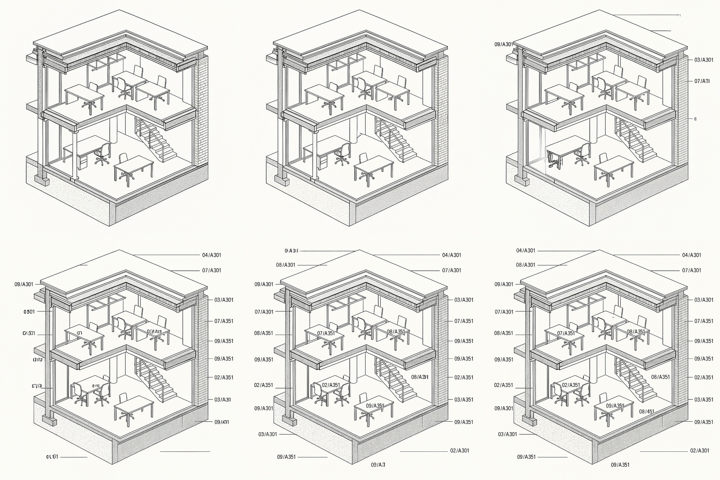
[ ! ] DISCLAIMER: Please note that due to the level of confidentiality of the projects I have worked on whilst employed by architectural practices in London UK, I cannot display this large part of my work experience. Some projects and images displayed here were therefore carefully crafted by myself using a combination of generative tools driven by text and sketches prompts to simulate the different types of designs and visuals I can produce.